
This guide compares public vs private sleep testing in Melbourne, focusing on what matters when someone is tired now, not “someday”.
What is a sleep test, and what does it diagnose?
A sleep test Melbourne measures breathing, oxygen levels, heart rate, and sleep stages to investigate disorders such as obstructive sleep apnoea (OSA). It can also help assess snoring, restless sleep, suspected narcolepsy, and periodic limb movements, depending on the type of study performed.
Most people book a sleep test Melbourne because of loud snoring, witnessed breathing pauses, morning headaches, unrefreshing sleep, or persistent daytime sleepiness..
What are the main types of sleep tests used in Melbourne?
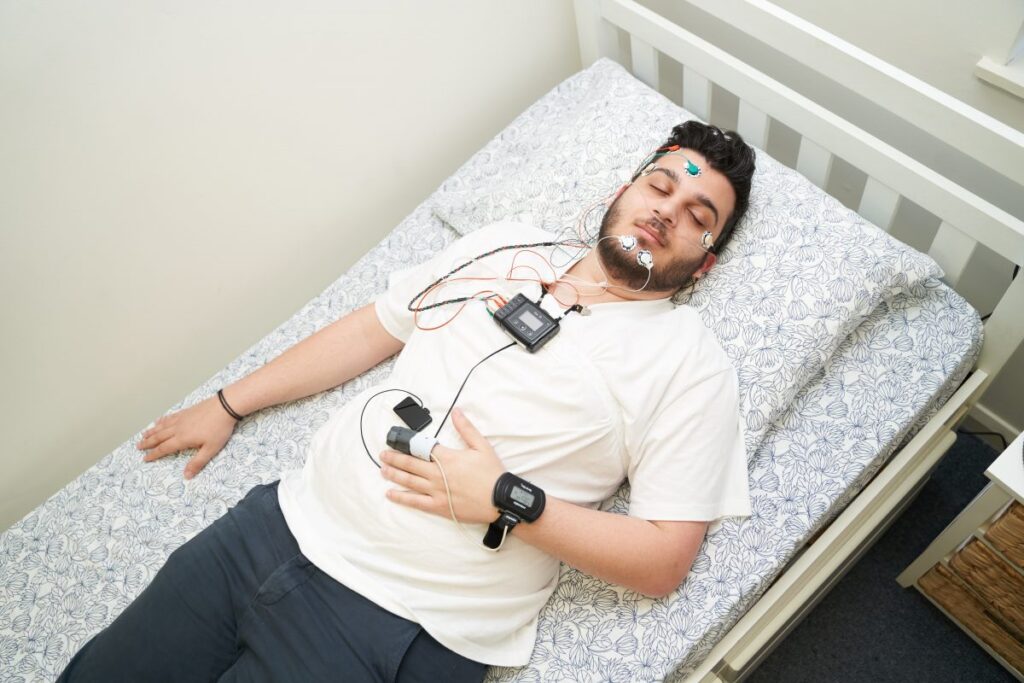
Most services use either a home sleep apnoea test (HSAT) or an in-lab polysomnography (PSG). HSAT is done at home with portable sensors and is commonly used when OSA is strongly suspected.
PSG is done overnight in a sleep laboratory and records more detail, which can matter for complex symptoms, safety-critical occupations, or when HSAT results are unclear.
How does the public system work for a sleep test in Melbourne?
In the public pathway, they typically start with a GP referral to a public hospital sleep clinic. The clinic assesses symptoms, comorbidities, and urgency, then decides whether to book a home study or an in-lab test.
Public services are well-suited to people who can wait and who want costs minimised, but the process often includes triage, multiple appointments, and longer lead times.
How does the private system work for a sleep test in Melbourne?
In the private pathway, they can usually book faster, often after a GP referral and sometimes via self-referral depending on the provider. Private clinics commonly arrange HSAT quickly, then schedule a specialist review to explain results and discuss treatment.
Private services suit people prioritising speed, scheduling flexibility, and continuity with a specific specialist, but they should expect out-of-pocket costs.
Which is faster in Melbourne: public or private sleep testing?
Private testing is usually faster because clinics can schedule HSAT within days to a couple of weeks, depending on demand. Public services often involve longer waiting periods due to triage and limited lab capacity.
If they have severe daytime sleepiness, safety concerns, or high-risk comorbidities, public clinics may prioritise them, but “urgent” still varies by service.
How much does a sleep test cost in public vs private care?
Public testing is often low cost for eligible patients, though there may still be fees depending on the service and appointment type. Private testing typically involves costs for the study, specialist consultation, and sometimes report fees, with Medicare rebates reducing but not always eliminating the gap.
They should ask for a written fee estimate that includes the test, scoring, physician interpretation, and follow-up appointment.
What are the differences in quality and accuracy?
Both public and private services can provide high-quality testing when they use accredited labs and qualified sleep physicians. Accuracy depends more on choosing the right test type for the symptoms and ensuring the study is properly set up and interpreted.
If symptoms are complex, PSG often provides more comprehensive information than HSAT, regardless of whether it is done publicly or privately.
Who is a better fit for a public sleep test in Melbourne?
Public services can be a good fit if they can tolerate longer waits and want to minimise costs. It can also suit those with complex medical histories who benefit from integrated hospital-based care.
They may do best in public care when they have time to attend multiple appointments and prefer a pathway that is less commercially bundled with devices. Read more about the global burden of Obstructive Sleep Apnea.
Who is a better fit for a private sleep test in Melbourne?
Private clinics can be a better fit when they need answers quickly, such as when fatigue affects driving, parenting, or work performance. It also suits those who value appointment choice, evening or weekend options, and faster follow-up for treatment.
They should still compare providers, because private does not automatically mean “more thorough” unless the clinic matches the test to the clinical picture. You may like to visit https://pasturedeficitdisorder.com/sleep-apnea-test-sydney-7-warning-signs-to-watch-for/ to get more about Sleep Apnea Test Sydney: 7 Warning Signs to Watch For.
What happens after the results: is treatment easier in one system?
Private services often move faster from diagnosis to treatment because the same clinic may coordinate CPAP trials, mask fitting, and follow-up. Public services may provide excellent care too, but treatment steps can take longer and may involve separate appointments or providers.
In both systems, long-term success usually depends on good education, mask comfort, and follow-up adjustments, not the speed of the initial test alone.
How should they choose between public and private sleep testing in Melbourne?
They should choose based on urgency, budget, symptom complexity, and the kind of follow-up they want. If they need fast clarity, private HSAT with prompt specialist review is often the quickest route. If cost is the priority and symptoms are stable, a public referral may be sensible.
A practical approach is to ask three questions before booking: how soon they can test, what the total out-of-pocket cost is, and who will manage treatment and follow-up if OSA is confirmed.
FAQs (Frequently Asked Questions)
What is a sleep test and what conditions can it diagnose?
A sleep test measures breathing, oxygen levels, heart rate, and sleep stages to diagnose disorders such as obstructive sleep apnoea (OSA). It can also assess snoring, restless sleep, suspected narcolepsy, and periodic limb movements depending on the test type. Common reasons for testing include loud snoring, witnessed breathing pauses, morning headaches, unrefreshing sleep, or persistent daytime sleepiness.
What are the main types of sleep tests available in Melbourne?
The primary sleep tests used in Melbourne are the home sleep apnoea test (HSAT) and in-lab polysomnography (PSG). HSAT is conducted at home using portable sensors and is typically used when OSA is strongly suspected. PSG is an overnight study done in a sleep laboratory providing more detailed information, suitable for complex symptoms or when HSAT results are unclear.
How do public and private sleep testing services differ in Melbourne?
Public sleep testing usually requires a GP referral to a public hospital clinic, involves triage, multiple appointments, and longer waiting times but often at low cost. Private clinics offer faster bookings, sometimes self-referral options, quicker HSAT scheduling, specialist reviews, and greater flexibility but come with out-of-pocket expenses.
Which option offers faster access to sleep testing in Melbourne: public or private?
Private sleep testing services generally provide faster access with HSAT appointments available within days to weeks. Public services may have longer wait times due to triage and limited capacity but may prioritise urgent cases based on severity and comorbidities.
What are the typical costs associated with public versus private sleep tests in Melbourne?
Public sleep tests are often low cost or free for eligible patients though some fees may apply depending on service type. Private testing involves costs for the study itself, specialist consultations, and report fees. Medicare rebates can reduce but not always eliminate out-of-pocket expenses. It’s important to request a written fee estimate covering all aspects including follow-up.
How should I decide between public and private sleep testing services in Melbourne?
Choice depends on urgency of symptoms, budget constraints, symptom complexity, and desired follow-up care. If rapid diagnosis is needed due to fatigue affecting daily life or safety concerns, private HSAT with prompt specialist review is often preferable. For stable symptoms where cost minimisation is key and waiting is acceptable, public referral may be suitable. Always ask about wait times, total costs, and treatment management before booking.